
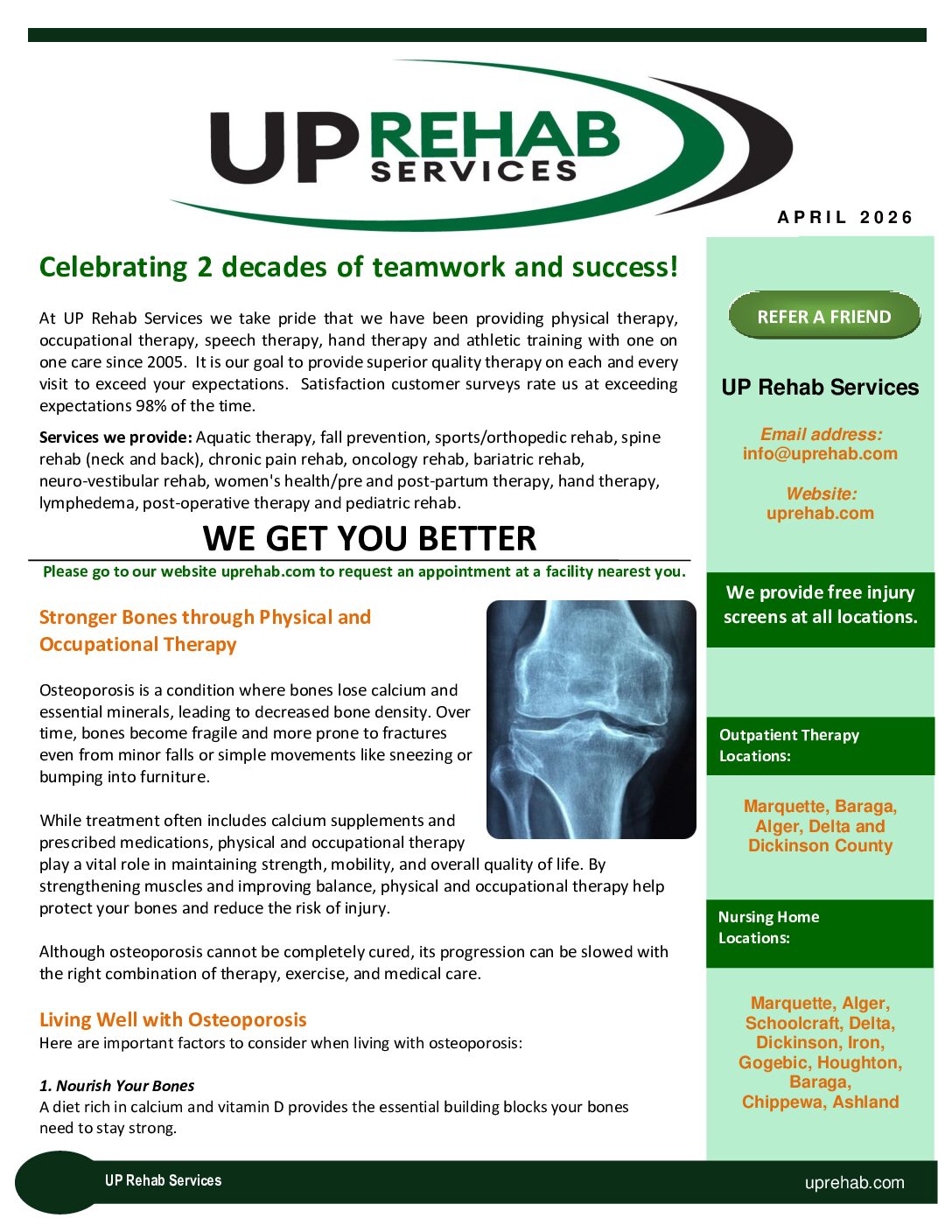
Stronger Bones through Physical and Occupational Therapy
Osteoporosis is a condition in which bones lose calcium and other essential minerals, leading to decreased bone density. Over time, bones become fragile and more prone to fractures even from minor falls or simple movements like sneezing or bumping into furniture.
While treatment often includes calcium supplements and prescribed medications, physical and occupational therapy play a vital role in maintaining strength, mobility, and overall quality of life. By strengthening muscles and improving balance, physical and occupational therapy help protect your bones and reduce the risk of injury.
Although osteoporosis cannot be completely cured, its progression can be slowed with the right combination of therapy, exercise, and medical care.
Here are important factors to consider when living with osteoporosis:
1. Nourish Your Bones
A diet rich in calcium and vitamin D provides the essential building blocks your bones need to stay strong.
2. Stay Active with Weight-Bearing Exercise
Always seek approval from a physician before starting any exercise program, especially if you have been diagnosed with osteoporosis. Simple exercises like walking and climbing stairs help maintain bone strength. Physical and occupational therapists can design a safe, personalized exercise plan tailored to your needs
3. Build Muscle Strength
Supervised weight training helps improve muscle strength. Physical and occupational therapists may recommend using tools such as elastic bands, free weights, and exercise equipment.
4. Improve Balance and Posture
These exercises improve posture and balance. They help in the prevention of falls, injuries, and fractures. Yoga and Pilates are examples of exercise used to improve posture and balance. All exercises should be done under the supervision of a licensed physical and occupational therapist.
If you have been diagnosed with osteoporosis, don’t lose hope. Millions of individuals with this condition lead healthy and productive lives. By collaborating with physical and occupational therapists and taking the right precautions, you can regain a sense of movement and function.
Physical and occupational therapy can help you:
- Improve balance and coordination
- Increase strength and mobility
- Reduce the risk of falls and fractures
Whether you are playing sports, hiking, or simply enjoying outdoor activities, proper preparation can help you stay injury-free.
Your physical and occupational therapist can also guide you on safe movement, proper lifting techniques, and injury prevention strategies. If a fracture does occur, they play a key role in your recovery, helping you regain mobility and confidence. Assistive devices like canes or walkers may also be recommended when needed.
Discover how you can protect your bones, improve your strength, and continue doing the things you love.